The Hidden Danger in Your Hotel Room
That mini fridge in your hotel room might not be keeping your leftovers as safe as you think. According to experts, many hotel mini fridges are actually beverage coolers that only cool to 50–60°F rather than the food-safe temperature of 40°F, creating potential bacterial growth risks for travelers storing perishable items.
With travel booming in the post-pandemic era, more families and health-conscious travelers are using hotel rooms to store food, breast milk, and temperature-sensitive medications. This hidden hotel hazard has become a timely safety issue that affects countless travelers who assume their mini fridge will keep items properly chilled.
Understanding the Temperature Danger Zone
Food safety experts emphasize the importance of the "temperature danger zone" – the range between 40°F and 140°F where bacteria can multiply rapidly. When hotel mini fridges only cool to 50–60°F, they're operating squarely within this dangerous temperature range, according to reports.
The two-hour rule applies even in hotel rooms: perishable foods left at unsafe temperatures for more than two hours can develop harmful bacteria levels. For travelers storing cooked leftovers, dairy products, or meat in what they believe is a proper refrigerator, this temperature difference could pose serious health risks.
How to Identify a Real Fridge vs. Beverage Cooler
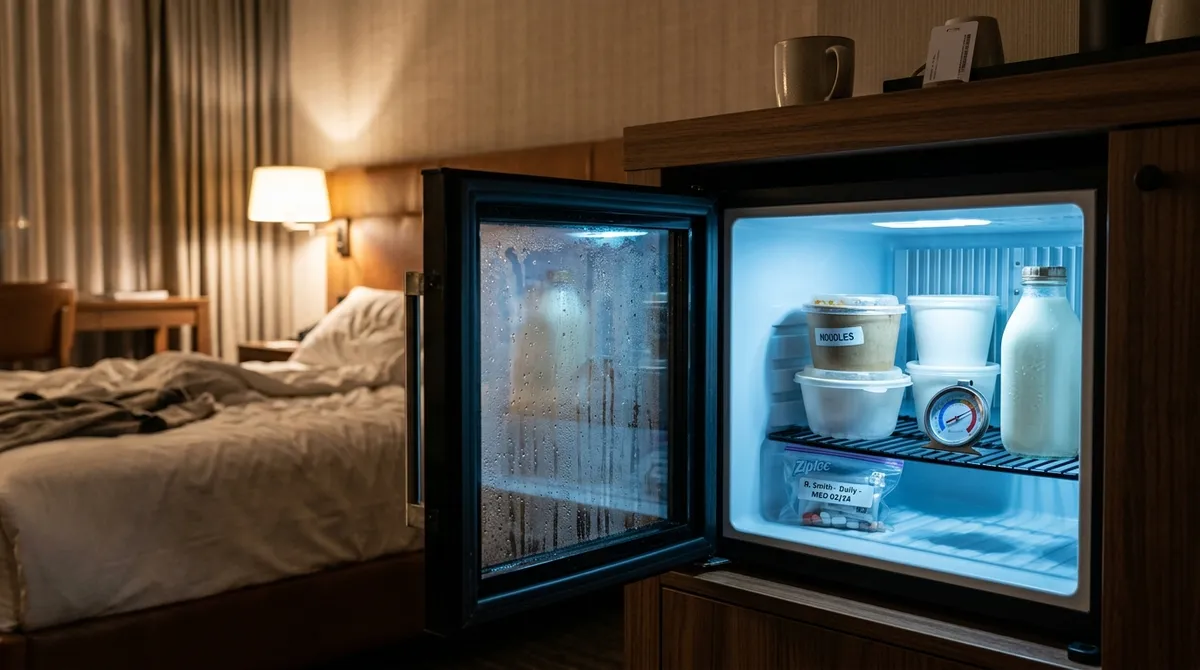
Experts suggest several ways to determine whether your hotel mini fridge is actually a refrigerator or just a beverage cooler. The "glass-front trick" involves checking whether the unit has a clear door – beverage coolers often feature glass fronts for display purposes, while true refrigerators typically have solid doors.
Another method is the compressor check. Real refrigerators have compressors that cycle on and off, creating the familiar humming sound. Beverage coolers often use different cooling technology that may not achieve the same low temperatures.
What's Safe to Store and What to Avoid
According to reports, certain foods can safely be stored in beverage coolers that only reach 50–60°F. Non-perishable items like pickles, beef jerky, and crackers don't require true refrigeration temperatures and can benefit from the cooler environment.
However, travelers should avoid storing cooked leftovers, dairy products, fresh meat, and other highly perishable items in these units. Medications requiring refrigeration may also be compromised if stored in a beverage cooler rather than a proper refrigerator.
Practical Workarounds for Travelers
For travelers stuck with a beverage cooler, experts suggest the ice-bag swap method as a DIY cooling solution. This involves using ice from hotel ice machines to create a makeshift refrigeration system for truly temperature-sensitive items.
Travelers can also be proactive by asking hotels about their mini fridge specifications when booking. Requesting specific information about whether units are true refrigerators or beverage coolers can help travelers make informed decisions about food storage during their stay.
Planning Ahead for Safer Travel
Creating a pre-booking checklist can help travelers avoid food safety issues. This includes inquiring about fridge types when making reservations and potentially requesting room upgrades if proper refrigeration is essential for medications or special dietary needs.
Travel experts recommend developing packing strategies based on accommodation amenities. Understanding the difference between beverage coolers and refrigerators allows travelers to pack appropriate foods and make alternative arrangements for items requiring true refrigeration.
The Bottom Line for Travelers
As travel continues to rebound, this hidden hotel amenity issue affects families, business travelers, and anyone who needs to store temperature-sensitive items during their stay. Being aware of the difference between mini fridges and beverage coolers – and knowing how to identify which type your hotel room has – can help ensure your next trip doesn't come with an unwanted side of food poisoning.
The key is asking the right questions before arrival and having backup plans for proper food storage when traveling with perishable items.